- 內容簡介
- 退換貨
- 團購說明
- 購物與運費
本書特色
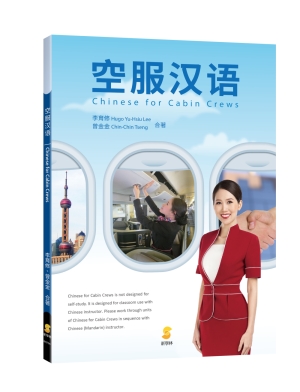
Chinese for Cabin Crews is the textbook adopted by Chinese teachers/trainers/tutors for non-native Chinese language learners (including but not limited to undergraduate airline-major students, airline trainees, ground staffs and cabin crews/flight attendants), preparing to communicate with Chinese-speaking passengers. The purpose of this textbook is to expose Chinese as foreign/second language learners who work in the airport and in the cabin to the types of Chinese vocabularies, conversations and tasks that they encounter in their workplace.
This textbook is based on Dr. Hugo Yu-Hsiu Lee’s lesson handouts developed from his and the oldest undergraduate Chinese-language program for the leading Airline Business Department of Thailand (International Air Travel Association’s Authorized Training Center) at Suan Sunandha Rajabhat University (Bangkok). The program in consideration is increasingly recognized as second-to-none for the total number (200+) of alumni who have made successful careers in major airline companies in the ASEAN region and the gulf states (including but not limited to Thai Airways, Thai Smile, AirAsia, Nok Air, Thai Lion Air, Bangkok Airways, Viet Jet, China Airlines, EVA Air and Emirates, UAE).
作者簡介
李育修(Dr. Hugo Yu-Hsiu Lee)
Dr. Hugo Yu-Hsiu Lee (PhD, Language Education, Indiana University-Bloomington, USA) is an award-winning researcher and full-time faculty at National Institute of Development Administration (Thailand). He is the United Nations Consultant (United Nations Learning Team Member) of the United Nations Headquarters, Asia region (United Nations, Economic and Social Commission for Asia and the Pacific, Bangkok).
美國印第安那大學語教博士,曾獲美國印大哈世迪傑出研究員獎得主,以及美國印大史特蘭紀念學者榮譽獎。現任泰國國家發展院(泰國的社科院)全職副教授,以及聯合國亞洲總部的聯合國官員中文班顧問/導師。
曾金金(Chin-Chin Tseng)
Chin-Chin Tseng is a professor of the Department of Chinese as a Second Language at National Taiwan Normal University. She received her Ph.D in Linguistics at University of Hawaii. She is a linguist, phonetician and teacher educator. Her training is in phonetics, interlanguage and L2 Chinese language teaching and learning.
Principal Investigator of An Analysis of Accuracy and Fluency of Modular Speaking Training in Chinese for Cabin Crews sponsored by Research Cooperation for “Strengthening cooperation with ASEAN and South Asian countries in the exchange of academic fields, education and humanities.”
服務單位:國立台灣師範大學‧華語文教學系暨研究所
學歷:美國夏威夷大學語言學博士
計畫主持人:「強化與東協及南亞國家合作交流學術型領域聯盟(教育及人文領域)」
計畫名稱:空服華語的準確度與流利度訓練模組分析
序
本书第一作者Hugo Yu-Hsiu Lee(李育修)
Issues in general purpose language textbooks that give rise to this textbook
Critics contend that there is empirical evidence that language for general purpose (LGP) instruction is unlikely to meet the needs of today’s foreign or second language learners who have a set of specialized and immediate target language needs for professional communication (Andriani, 2014; Trace, Hudson, & Brown, 2015). I argue in this textbook’s forward that over the past ten years or so teaching and learning Chinese as a foreign or a second language (which refers to the branch of foreign or second language education in which teaching methods are traditionally derived from the general purpose of Chinese language teaching and learning) has been criticized on a number of grounds: general purpose Chinese language teaching has lost touch with learners focusing on the needs of communicative Chinese language ability in a particular subject area or in a professional workplace (own fieldwork, 2009-2018), for instance, Chinese for real-estate agents, Chinese for ground attendants and Chinese for cabin crews. I should also note that the teaching of general knowledge of the Chinese language fail to meet the needs of those learning the Chinese language for occupational purposes (own fieldwork, 2009-2018). Language for specific purposes (henceforth LSP), thus, has emerged from the varying needs and goals of foreign or second language learners (Trace, Hudson, & Brown, 2015).
The problems encountered in LSP are multiple, all of which stem from the question of how the in-class language learning tasks can be transferred to real-world workplace communication. First, the problem one encounters when designing a LSP course is that common communication skills necessary across all industries and professions to meet the needs of all foreign or second language learners may not exist. This results in that foreign or second language teachers conduct needs analysis of respective students and classes, and design tailor made LSP courses, facilitating students to speak and converse efficiently and practically in the in-class language-use tasks as “prescribed by their field of study or work situation” (Bojović, 2006). This gives rise to task-based language teaching (henceforth TBLT).
Second, a related problem is the degree to which foreign or second language teachers are capable of acquiring discipline-specific and extra-linguistic knowledge to teach the respective LGP and TBLT courses, in addition to the linguistic knowledge with respect to the target language. Although LGP and TBLT may have a great deal in common with foreign or second language courses for general purposes (both are essential to take into account, for instance, linguistic development, teaching methodology, classroom management, assessment and evaluation for their students), the former faces more challenges as they need to understand the requirements of professional communication in a specific field rather than the teaching activity itself (Bojović, 2006). Despite the development of LSP and TBLT courses since the 1980s, the curriculum drafting, lesson planning, teaching material development, course design and implementation of language learning tasks that offer learners with real-world opportunities to practice language tasks needed for professional communication and industry-oriented talks remain a challenge for LSP and TBLT teachers (Calvert & Sheen, 2015).
Third, in the contemporary applied linguistics literature and classroom teaching, LSP and TBLT courses are most often associated with English for Specific Purposes (henceforth ESP) instruction (Anthony, 1998; Ahmed, 2014; Trace, Hudson, & Brown, 2015). ESP has grown into a movement (e.g., UK, Japan and elsewhere) since the inception of the early 1960’s (Anthony, 1998). Although Chinese is gaining prominence in foreign or second language teaching and learning, there is scarcity of textbook for Chinese LSP and TBLT courses.
The purpose of the textbook
The aim of this textbook is to propose some ways of curriculum drafting, lesson planning, teaching material development, course design and implementation of language learning tasks (focusing on task selection and sequencing) for a LSP and TBLT course, known as Airline Chinese / Chinese for Cabin Crews (or Chinese for the Cabin Crew).
Background and context for the textbook
China has poised itself to become the world’s largest market for both tourist travel and business travel. According to the CIW Team’s post in the China Internet Watch, it has been three consecutive years (2012-2015) for China to supply “the largest outbound tourism market in the world” and the estimated growth of the number of Chinese outbound tourists is increasing (2013: 98 million vs. 2014: 109 million). It is also of importance to note by The Economist (The dragon takes flight, 2016) that since the first quarter of 2016 China has overtaken the US to become the world’s largest market for business travel. As reported by Global Business Travel Association (GBTA) (as cited in the dragon takes flight, 2016), it is estimated that Chinese business travelers spent $291.2 billion in 2015 contrasted with $290.2 billion by American counterparts from the US. In response to China’s fast growth of outbound tourists and business air travelers, the air travel industry, particularly the airline companies, has recruited Chinese-speaking ground / flight attendants to provide services on-the-ground (airport’s service desk) and on-board (cabin) for the rising number of Chinese air travelers. In fact the airline industry in the Southeast Asia expects the number of Chinese-speaking flight attendants to increase over the next decades, as many airline companies (Bangkok-based and Manilabased airlines) highlighted Chinese speaking flight attendant candidates wanted in their recruitment advertisements.
Literature that inform the design of the textbook
The design of the Airline Chinese / Chinese for Cabin Crews textbook is informed and framed by LSP, TBLT and ESP, due largely to that, as stated earlier, general purpose language course fails to meet the needs of foreign or second language learners for fieldspecific communication. In recent years, there has been a growing prominence and considerable interest of LSP and TBLT courses by foreign or second language teachers, educators and researchers (Benson, 2015; Calvert & Sheen, 2015). Some common courses of LSP and TBLT concentrating on the specifics (of terms, vocabularies, phrases and conversations) of certain industries and professions may include Academic English Writing for EFL/ESL or International Students (British Council, 1978), Business English, Business Chinese (offered, for example, at the Assumption University), English for Airtraffic Controllers, English for Technical Writing for Civil Engineers (offered, for instance, at the Asian Institute of Technology), English for Medical Purpose (An example cited by Andriani, 2014), English for Occupational Purpose (An example cited by Andriani, 2014) and Spanish for Tourism. There are some “key distinguishing characteristics” between LSP courses and general foreign or second language courses (Bojović, 2006). Take the ESP for example, Carver (1983) listed three main characters shared across ESP courses (as cited Bojović, 2006): 1) authentic materials, 2) purpose-related orientation, and 3) selfdirection. The design of this textbook is thus informed by above-mentioned literature.
References
1. Ahmed, M. K. (2014). Issues in ESP (English for specific purposes). ‘ELT Voices – India’International Journal for Teachers of English, Vol. 4 (No. 1). Retrieved from http://eltvoices.in/category/volume-4/volume-4-issue-1/
2. Andriani, G. (2014). Problems in teaching English for specific purposes in higher education. Nobel Journal of Literature, Language, and Language Teaching, Vol. 5 (No. 1), pp. 30-40.
3. Anthony, L. (1998). Defining English for specific purposes and the role of the ESP practitioner. Center for Language Research 1997 Annual Review, pp. 115-120.
4. Benson, S. D. (2016). Task-based language teaching: An empirical study of task transfer. Language Teaching Research, Vol. 20 (No. 3), pp. 341–365.
5. Bojovic, M. (2006). Teaching foreign language for specific purposes: Teacher development. 31st Annual ATEE Conference, At Portoroz, Slovenia.
6. Calvert, M., & Sheen, Y. (2015). Task-based language learning and teaching: An action research study. Language Teaching Research, Vol. 19 (No. 2), pp. 226–244.
7. Carver, D. (1983). Some propositions about ESP. The ESP Journal, Vol. 2, pp. 131-137.
8. CIW Team (n.d.). China, the largest outbound tourism market in 3 consecutive years. China
9. Internet Watch. Retrieved from https://www.chinainternetwatch.com/13152/thelargestoutbound-tourism-market-3-consecutive-years/
10. The dragon takes flight (2016, May). The Economist, Retrieved from http://www.economist.com/blogs/gulliver/2016/05/dragon-takes-flight
11. Trace, J., Hudson, T., & Brown, J. D. (2015). An overview of language for specific purposes. In J. Trace, T. Hudson, & J. D. Brown, Developing Courses in Languages for Specific Purposes (pp. 1–23) Honolulu: University of Hawai‘i.
本书第二作者Chin-Chin Tseng(曾金金)
国立台湾师范大学华语文教学系暨研究所
职称:教授
此次很荣幸与李育修老师合作出版空服汉语教材,李老师是第一线训练空服人员汉语的教师;在课堂教学中,除了教授空服汉语的语词和常用句型,更需着重空服人员的声、韵、调准确度训练。但是在训练汉语为二语的空服人员时,除了掌握语词的发音与声调以外,进入语流的口语表达正确度与流利度是非常关键的训练。由于本人长期在汉语文教学进行有关声学语音分析之研究,将结合线上正音的技术,让汉语为二语的空服人员能够利用线上即时反馈学习平台,进行自我检测,并自主性地改正发音及调整音高、音长与音强的控制。藉由此次出版的空服汉语教材,对汉语为二语的航空系学生以及预备进入航空业和在职的空服人员,进行空服汉语正确度与流利度的训练。
首批适用对象,设定为泰语母语者的准空服人员,结合李老师实体空服汉语教学,指导学生学习空服汉语教材的内容,我的部分则是精进空服人员汉语发音与口语表达。自我检测系统从发音(包括:声母、韵母)、音高(包括:字调、语调、句调及轻重音)、音长(包括:音节组成及语句切分、轻重音、停顿)及音强(包括:轻重音),评估空服人员汉语口语表达的正确度与流利度。
此外,为协助空服人员培养良好的汉语发音习惯,有效改善口语表达,未来若有机会,将以空服汉语教材,制作搭配线上口说训练课程,提供空服人员自主练习、自我改善的训练机制。
Chin-Chin Tseng
National Taiwan Normal University
Professor, Dept. of Chinese as a Second Language
目錄
Foreword by Ammarawadee Sornsuphap I
Foreword by Phattharaphon Silarak III
Preface by Hugo Yu-Hsiu Lee V
Preface by Chin-Chin Tseng XIII
To the Teacher & the Student XV
Guide to use this Textbook XIX
Unit I
Before Boarding:
Ground Service
Lesson 1 Ground Service 3
Lesson 2 Check-In Service 13
Lesson 3 Airport Facilities 31
Lesson 4 Flight Status 39
Lesson 5 Boarding Service 49
Unit II
After Boarding:
On-board Service
Lesson 6 Safety Instruction to Passengers 59
Lesson 7 Serving Drinks to Passengers 67
Lesson 8 Serving Meals to Passengers 75
Lesson 9 Entertainment Media and Facilities 83
Lesson 10 Inflight Shopping & Landing Service 89
Unit III
After Landing:
Ground Service
Lesson 11 Ground Service After Landing 103
Appendices Word & Phrase Bank: Small Flashcards 111
Index 128
2、依照消費者保護法規定,凡消費者於網站購物均享有7天商品鑑賞期,但是在門市取貨則不在此規範內,因為門市取貨可當場檢視商品,所以不符合消費者保護法第19條7日猶豫期規定。唯需注意辦理退貨商品需保留完整外包裝、附件、外盒等等,才可辦理退貨。
3、如欲退貨,請在鑑賞期內將商品寄回,每張訂單限退一次,七日鑑賞期申請部分退貨,退貨後訂單內剩餘商品金額未達免運費門檻,將向您補收原運費$80元。
4、鑑賞期非試用期,若您收到商品經檢視後有任何不合意之處,請立即依照退貨規定辦理退貨
5、除非您收到的書與訂單不符,否則該筆交易已完成,無法再退、換書。
6、若收到的書籍有缺頁、破損、倒裝,請寄回更換。應更換之書籍已無庫存時,您可選擇全額退款,或更換其他新學林經銷之圖書並補、退差價。
7、新學林法學雜誌訂戶,若中途退訂,退還剩餘書款計算方式=已繳書款-實際寄發書金額(以每本定價460元計算)-基本手續費200元(含人工處理費、金流手續費等)。詳細退款方式以網路書店公告為準
8、若需退款,作業時間約十四個工作天。
9、函授退換貨請依照「函授退費說明辦理」。
10、電子書、期刊、雜誌依《消費者保護法》第19條第二項『通訊交易解除權合理例外情事適用準則』,非因無內容或無法使用之狀況,即無法退換貨。
11、海外地區因跨國運送作業繁複,故不提供海外退換貨服務。
2、如您需要其他類型產品團購,則請聯繫客服或直接將需求e-mail至 law@sharing.com.tw 即可
1.本站商品出貨一律是最新版本。
2.一般書籍
(1)網路訂購書籍會以貨運或掛號方式寄送。
(2)當日訂單指每日中午12點前付款完成的訂單,每日中午12點以後付款完成的訂單,則視為隔天訂單(不含例假日)。
(3)一般情形下,我們於確認訂單並收到款項後3-4個工作天(不含例假日)內為您辦理出貨事宜,出貨依照付款時間順序,並配合物流公司運送安排,無法由會員指定包裹的寄送日期及物流公司。連假後、開學季、書展期間,訂單出貨會有所延遲,約需7-10個工作天,實際出貨時間仍將依訂單量調節。
訂單完成後其訂購內容、金額及運費即無法做任何的變更,亦無法合併且無法指定不同訂單合併一起出貨。
3.預購、調貨、加刷書籍須知
若您所購買的書籍中包含「即將出版」的預購書籍與「目前已經出版」的調貨、加刷書籍,預購商品與調貨、加刷書籍會與現貨書籍一起寄出,購買前請務必確認是否可以等待,如欲分開出貨,需另再加收80元運費(海外地區運費另計)。
4.任選活動組套出售的優惠商品(如:任選x本x折、滿額加購 / 贈品...等活動),建議與其它商品分開下單,以獲得最快的取貨速度。
5.已顯示「缺貨」的商品(包含少量提供、絕版商品),暫時無法提供會員購買。建議您可點選商品頁面右方「鈴鐺按鈕」,加入「可訂購時通知我」,當商品為正常供貨,新學林將以EMAIL通知您。
6.外版書
一般約7~14個工作天左右,建議把外版書與其它商品分開下單,以獲得最快的取貨速度。
7.海外地區
(1)海外地區由於寄送方式、航運、海運清關時間不穩定,可能造成航班及清關時間延誤,如有延誤到貨情形,請見諒。 付款方式僅提供信用卡線上付款。
(2)各國依商品種類及價值核訂關稅與附加費用,若海關核定需支付進口關稅,則需由收貨人自行支付。
(3)跨國運送作業繁複,故不提供海外退換貨服務,出貨前我們皆會細心檢查及包裝,請您安心訂購。
(4)商品出貨後,即無法修改寄送位址、收件人等資料。
(5)運送注意事項
請提供護照英文全名/本名,若因為收件資訊不正確無法配送且無人簽收,導致包裹退回我們將直接取消整筆訂單。
被退回之包裹僅會以購物金方式歸還商品金額 ( 運費一律不歸還 ),作業完成後也會以e-mail方式通知您,若需重新寄送包裹,需自行負擔運費。
※因各運送公司不定期調整運費之計算方式,故實際將以結帳時所顯示之運費為主;而各國進口關稅標準不同,若領取包裹時,貴國欲收取商品之關稅或偏遠地區另收之費用,需買家自行支付。
※結帳完成後視同同意運費酌收方式和關稅/物流費之處理方法。
系統會依材積及收貨地區自行計算運費,跨境恕不參與官網相關免運優惠活動。
INVOICE說明
▪️依照台灣營業稅法新學林網路書店將不會開立統一發票。
(營業稅法:直接外銷貨物或勞務予國外買受人得免開立統一發票)新學林網路書店會於包裹中附上商品明細以供核對商品。
8.函授課程教材
函授教材以貨運或掛號方式寄送。一般情形,若是已開課課程,首次寄送教材會於完成付款後約4個工作天出貨(不含例假日),並且依當時的課程進度寄送相關教材;若是尚未開課科目,將依照開課時間寄送相關教材。
9.本站所有商品都會仔細包裝後審慎寄出,難免會因運送過程中造成不可抗力的因素,如完美主義者不建議購買,可直接至實體店面選購。
10.電子書、期刊、雜誌
依《消費者保護法》第19條第二項『通訊交易解除權合理例外情事適用準則』,非因無內容或無法使用之狀況,即無法退換貨。
11.您可至【會員專區】>【訂單管理】,查詢商品寄送進度,實際送達時間則須視本公司作業流程及物流配送進度而定。若遇節慶假日(大檔期),或其他不可抗力之因素,則可能造成物流延遲配送。
12.商品出貨後,即無法修改寄送地址、收件人等資料,請您送出訂單前,務必確認您的訂單資料為正確,以保障您的權益。若您原本的地址無法成功投遞,包裹將會被退回,並以EMAIL方式通知會員,若要再次寄送,需補80元運費(海外地區運費另計,不得與其他訂單合併寄送),當您完成補繳運費,我們將盡速安排補寄事宜。
13.如有發票相關問題,請與客服部聯繫,逾期恕不受理。客服部:02-27001808分機24;電子信箱:law@sharing.com.tw
二、取消訂單
1.訂單成立後,遇有修改付款方式、訂購商品、金額及數量等情況,必須請您申請取消訂單,重新訂購。申請取消訂單的流程:【訂單管理】>【訂單編號】>【我要詢問】>【取消訂單】,客服將為您取消原訂單,如原訂單已完成付款,直接進行後續退費流程;您也可以選擇來電或LINE、EMAIL的方式進行取消訂單。客服部:02-27001808分機24;電子信箱:law@sharing.com.tw。
2.會員選擇門市取書,請於訂單成立後7日內來電(或LINE)預約取書日,未於約定日取書,訂單將為您保留3日,逾期將自動取消訂單。
3.若為任選活動而組套出售的優惠商品(如:任選x本x折、滿額加購 / 贈品...等活動),不可單品取消、退貨,需整筆一併取消。
三、運費說明
1.宅配到府:貨運單筆訂單金額滿1000元,可享免運乙次,未滿則加收80元(台灣本島、離島皆同)。符合單筆訂單免運資格者,若要分批出貨,每次則須收取80元運費。
如遇收件人未收件,導致包裹被退回的情況,新學林將以EMAIL方式通知會員;若要再次寄送,收件人需補80元運費(海外地區運費另計,不得與其他訂單合併寄送),當您完成補繳運費,我們將盡速安排補寄事宜。
2.新學林門市取貨:免運。
註:若遇活動檔期,訂單處理費用(運費/郵資)將依照活動優惠標準調整,不另行公告請參考活動網頁。
四、本公司保留隨時修改、終止變更商品之權利。修改後之商品內容將於本網頁更新,恕不另行通知。
五、如有未盡事宜,本公司保有調整及最終解釋權之權利。